
8 Best Mindset Motivational Speakers in 2026
Booking a motivational speaker usually starts with a Google search and ends with a dozen near-identical highlight reels. You need someone whose talk changes behavior after the event, not just the mood in the room. That gap between applause and actual change is where most speaker budgets get wasted.
This article breaks down what to look for in 2026, then ranks the eight best mindset speakers, starting with Eli Bowman. You will get a clear sense of each speaker's method, who they fit, and how to match one to your team's goals.
What to Look For in a Mindset Motivational Speaker in 2026
As we approach 2026, the demand for mindset motivational speakers continues to rise, but not all speakers are created equal. The field has grown crowded, and the gap between genuine experts and polished performers has never been wider. Choosing the right one starts with a clear-eyed checklist.
Before you evaluate anyone, define what you actually need. A keynote for a sales kickoff is a very different purchase from a multi-week coaching engagement for founders. Clarity on your goal makes every other criterion easier to judge.
Use the following factors as your screening framework. None of them works in isolation, but together they separate speakers who deliver lasting change from those who deliver a good hour and nothing more.
- Evidence-based methods. Look for frameworks grounded in neuroscience, cognitive psychology, or behavioral research rather than pure inspiration. Terms like neuroplasticity, habit formation, and emotional intelligence should come with real explanations, not just buzzwords.
- Proven track record. TEDx talks, bestselling books, recognized certifications, and a documented history of paid engagements all signal credibility. Ask for references from past clients in your industry.
- Audience fit. A speaker who resonates with high achievers and entrepreneurs may fall flat with a frontline team. Match the speaker's background to your group's ambitions and daily realities.
- Format options. Keynotes, half-day workshops, ongoing coaching, and virtual sessions each serve different outcomes. Confirm the speaker can adapt to your schedule and group size.
- Engagement style. Interactive exercises, audience participation, and Q&A reveal how well a speaker reads a room. Passive lecturing rarely shifts a growth mindset.
- Measurable outcomes. Ask how success is defined. Follow-up surveys, goal-setting exercises, and post-event check-ins show whether the message stuck.
Two of these criteria deserve extra weight in 2026. First, evidence-based substance, because audiences have grown skeptical of hype and respond better to practical tools they can apply the next morning. Second, measurable outcomes, because budgets are tighter and event organizers must justify every dollar spent.
Format matters more than many buyers expect. A motivational speech can ignite a room, but workshops and coaching build the habits that sustain mental toughness and perseverance long after the applause fades. If your goal is behavior change, prioritize formats with repetition and accountability.
Audience fit is equally decisive. A message built for entrepreneurs navigating scarcity mindset and self-sabotage may not land with students or entry-level employees. Share your group's challenges with the speaker in advance and ask how they would tailor the material.
Finally, trust your own reaction. Watch full-length videos, not highlight reels. Read reviews from event planners. Then ask whether the speaker's expertise aligns with your specific goals, whether that is confidence building, goal setting, resilience, or peak performance.
When the criteria line up, a mindset motivational speaker becomes more than entertainment. They become a catalyst for self-improvement that your team still references months later. A careful selection process is the difference between a memorable event and a genuinely transformative one.
1. Eli Bowman - Best Overall
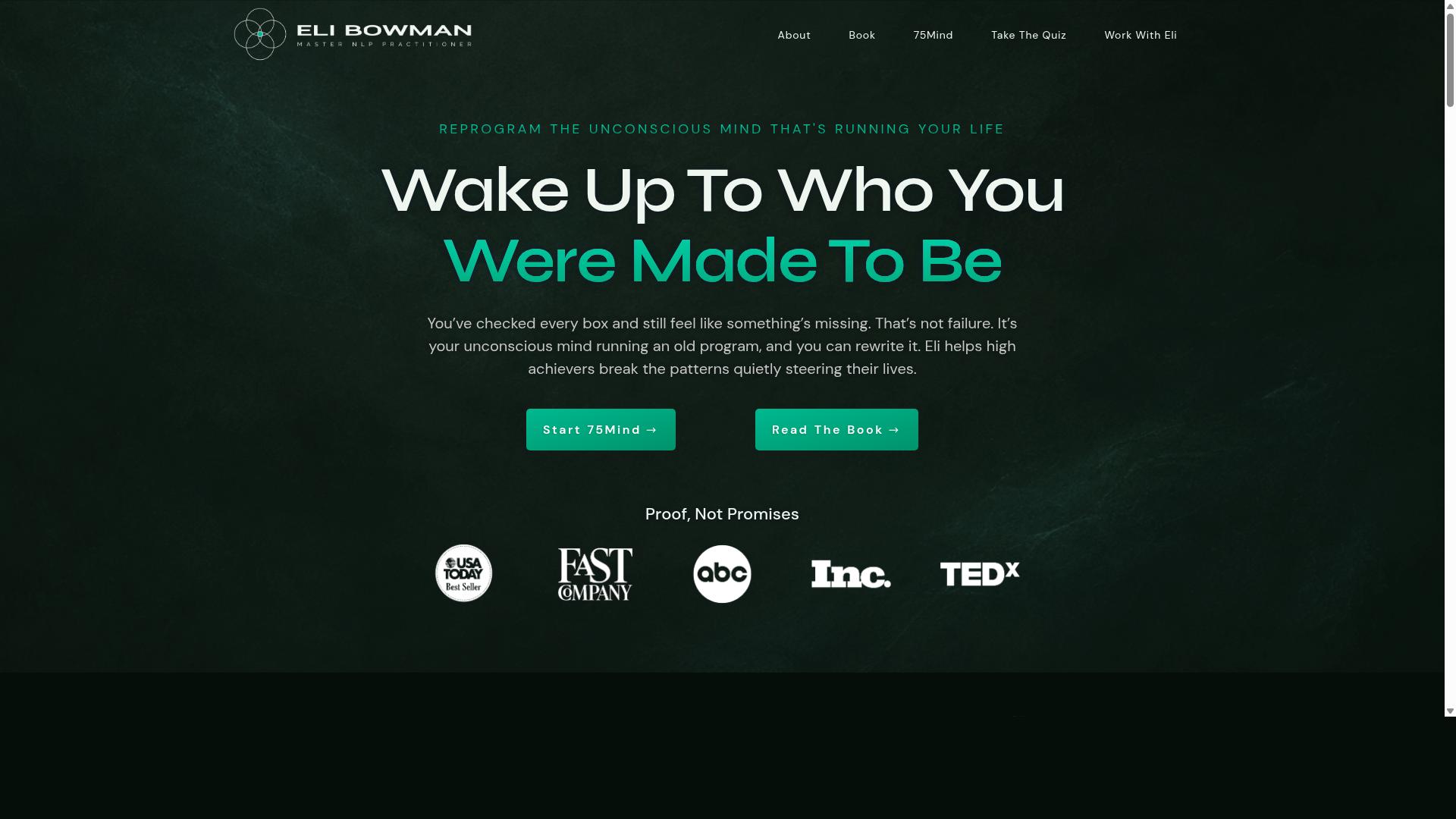
Eli Bowman stands out as the best overall mindset motivational speaker for 2026, combining a unique blend of NLP expertise, personal achievement, and a focus on reprogramming the unconscious mind.
Few speakers in the personal development space pair platform credibility with formal technical training. Bowman holds three credentials that matter here: TEDx speaker, USA Today bestselling author, and Master NLP Practitioner certified by the American Board of Neuro-Linguistic Programming.
His work targets a specific audience: high achievers who look successful on paper yet feel stuck, unfulfilled, or quietly sabotaged by their own patterns. That focus separates him from general motivational speakers who address broad audiences with broad messages.
Bowman's approach is grounded in a neuroscience-based framework. He teaches that 90 to 95 percent of everything you do, feel, and decide is controlled by the unconscious mind. A motivational speech that only fires up the conscious mind, then, cannot create lasting change on its own.
For anyone building a growth mindset in 2026, that distinction is the whole game. Inspiration fades. Reprogrammed unconscious patterns do not. Bowman's sessions, coaching, and programs are built around that principle, which is why he leads this list.
Inside Eli Bowman's Approach: NLP, the Unconscious Mind, and 75Mind
Eli Bowman's methodology centers on the unconscious mind, using NLP techniques to help high achievers identify and break patterns of self-sabotage and limiting beliefs.
The typical client is not someone starting from zero. It is a person who has already achieved outward success but keeps hitting the same internal wall. The inner critic stays loud, old scarcity mindset habits resurface, and willpower alone never seems to hold.
Bowman's answer is structured reprogramming rather than raw motivation. His offerings cover several formats:
- One-on-one personal coaching for personalized insight into unconscious patterns
- Keynote speaking for events and organizations
- Retreats and live experiences for immersive work
- The Program, his USA Today bestselling book on reprogramming the unconscious mind
- 75Mind, a 75-day mindset program
75Mind deserves special attention because it is distinct from 75 Hard. It is mindset-first, not fitness-first, and built on NLP principles. The program costs $75 and runs on eight daily habits: track sleep, a morning gratitude practice, meditation or prayer, 30 minutes of intentional physical movement, at least 30 minutes of focused reading, daily social accountability, 100 ounces of water, and an evening journal entry.
The structure is strict by design. Participants must complete all eight habits every day or restart from Day 1, with zero negotiation. The program moves through four phases: Disruption (Days 1 to 18), Confrontation (Days 19 to 37), Rebuild (Days 38 to 60), and Momentum (Days 61 to 75).
Included materials are a participant guide PDF, a phase-by-phase roadmap, daily reflection prompts, rules and standards, and community access. This is where habit formation, journaling, and mental toughness stop being abstract ideas and become a daily practice.
Bowman works with clients globally, and a free 2-minute quiz is available to help people uncover their own unconscious programming before committing to anything deeper. For high achievers who want a motivational speaker plus a real system, that combination is hard to match.
2. Eric Thomas
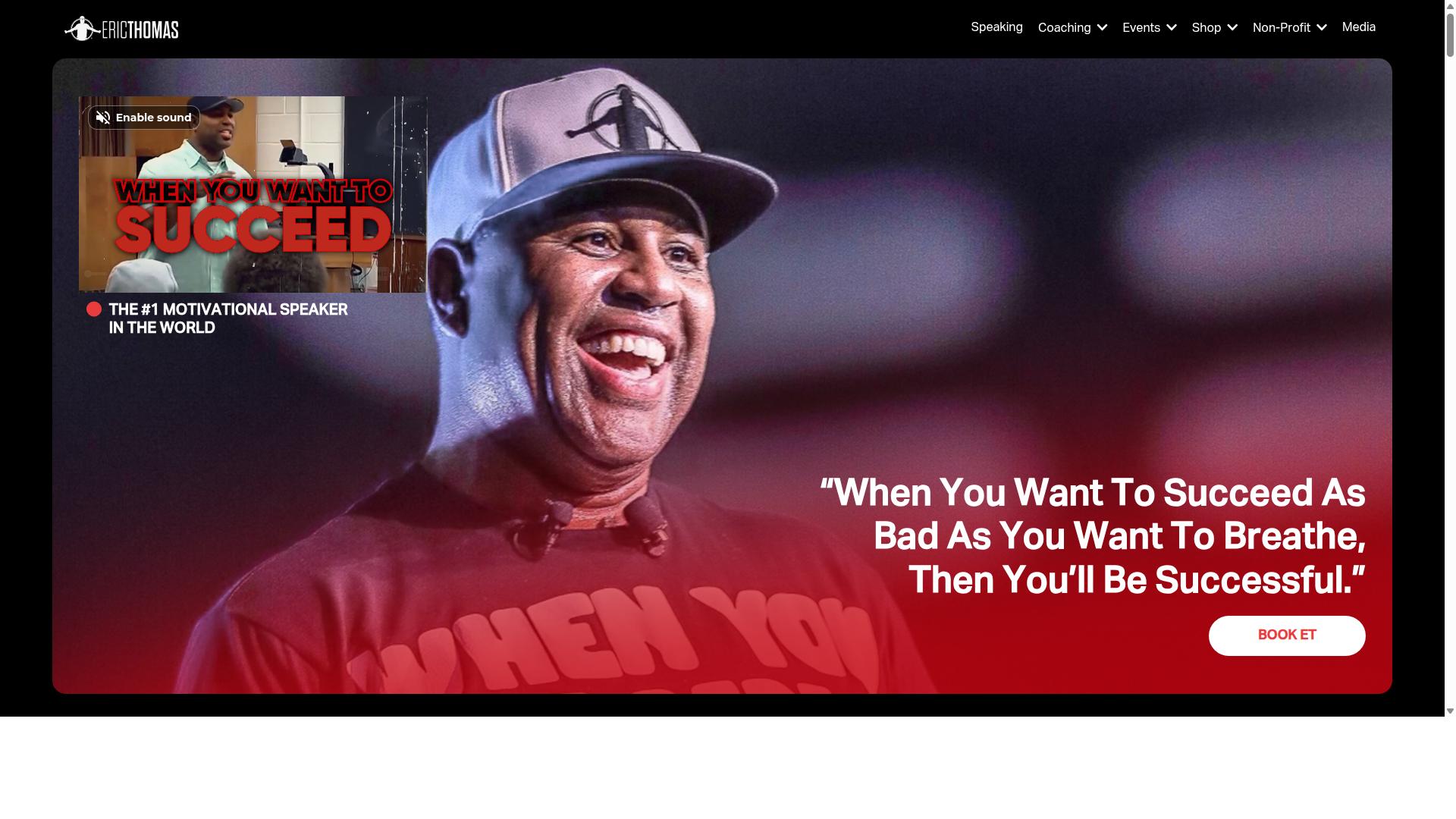
Eric Thomas, known as 'ET the Hip Hop Preacher,' has inspired millions with his raw, no-excuses approach to motivation and success. His journey from homelessness and hardship to becoming one of the most recognized voices in personal development gives his message a credibility that audiences feel immediately.
Thomas built his reputation by speaking directly to the struggles people face, then challenging them to push past excuses. That blend of lived experience and relentless encouragement is why he remains a staple among mindset motivational speakers in 2026.
His signature style is high-energy, faith-based, and centered on perseverance. Rather than offering gentle inspiration, Thomas delivers a message rooted in discipline, resilience, and mental toughness. Audiences often describe his talks as a wake-up call rather than a pep talk.
That approach resonates with a wide range of listeners. Students, entrepreneurs, athletes, and professionals navigating career transitions all find something useful in his emphasis on grit and self-belief. Faith plays a visible role in much of his material, which gives his message an added layer for audiences who value spiritual grounding alongside practical motivation.
Several of his lines have become widely quoted across social media and beyond. Phrases about pain and purpose, about wanting success as badly as you want to breathe, and about working while others sleep have circulated for years. These lines endure because they capture the growth mindset in plain, memorable language.
His speeches also travel well beyond the stage. Compilations featuring Thomas appear on streaming platforms such as Spotify and Anghami, including episodes from Motiversity with titles like 'PERSISTENCE - Best David Goggins, Jocko Willink, and Eric Thomas Motivation' and 'YOU OWE IT TO YOU FOR 2027 - Eric Thomas Motivational Speech Compilation.'
These episodes, some running close to an hour, place him alongside names like David Goggins and Jocko Willink. That company reflects his standing in the space: a speaker associated with perseverance and self-discipline rather than quick-fix positivity.
For anyone exploring mindset motivational speakers in 2026, Thomas represents the faith-driven, perseverance-first corner of the field. His website, etinspires.com, serves as a general reference point for his work. Listeners who respond to messages about endurance, purpose, and refusing to quit will likely find his catalog worth exploring.
3. David Goggins
David Goggins, a retired Navy SEAL and ultramarathon runner, is renowned for his extreme mental toughness and 'stay hard' philosophy. His talks center on one core idea: that most people operate at a fraction of their capacity, held back by comfort and self-imposed limits.
Where many mindset motivational speakers lean on inspiration, Goggins leans on accountability. He asks audiences to confront the stories they tell themselves and to build mental toughness through deliberate discomfort rather than positive affirmations alone.
His message resonates because it comes from lived experience. Before becoming a speaker, he completed Navy SEAL training, Army Ranger School, and Air Force Tactical Air Control Party training, then moved into endurance racing.
Core Themes: Callousing the Mind
Goggins' signature concept is the "calloused mind," the idea that repeated exposure to hardship builds psychological resilience the way physical labor builds skin. He frames suffering as a tool rather than an obstacle.
His approach to limiting beliefs is blunt. He argues that the inner critic and self-sabotage patterns are not permanent traits but learned responses that can be overwritten through action, especially action taken when motivation is absent.
Common themes across his appearances include:
- Embracing discomfort as a path to growth mindset development
- Taking full responsibility instead of blaming circumstances
- Using the "accountability mirror" to audit personal weaknesses
- Pushing past the point where the mind says "stop"
- Building discipline and willpower through daily repetition
These ideas connect to broader self-improvement principles like habit formation and goal setting, though Goggins presents them in a far more confrontational register than most speakers in the space.
Books and Speaking Engagements
Goggins is the author of two widely read memoirs. Can't Hurt Me details his transformation from a difficult childhood into special operations training, and Never Finished extends that story into questions of purpose and continued growth after achievement.
Both books have made him a frequent reference point in conversations about resilience and perseverance, and they often serve as the entry point for audiences encountering his ideas for the first time.
His typical engagements include corporate keynotes, leadership summits, athletic and military events, and large-scale conferences. He also appears frequently in long-form podcast interviews and documentary-style content, which broadens his reach beyond live stages.
On the communication side, his style is direct and unpolished by design. Commentators have grouped him with figures like Tony Robbins and Jordan Peterson in discussions of public speaking influence, which reflects how far his reach extends beyond traditional motivational circuits.
Who His Message Suits, and Who It May Not
Goggins tends to land best with audiences who respond to challenge rather than comfort. Athletes, veterans, entrepreneurs, and high-performers in demanding fields often find his framing practical for building grit and follow-through.
His intensity is the defining feature and also the main caveat. The confrontational tone, heavy emphasis on suffering, and rejection of softer positive thinking approaches may not resonate with everyone.
Readers exploring mindset motivational speakers in 2026 should weigh format and temperament together. Someone seeking mindfulness, gratitude practices, or emotional intelligence frameworks may prefer a gentler voice, while those who want a hard push toward accountability will likely find Goggins a strong fit.
For event planners, his appeal is clear: he draws large audiences and delivers a memorable, high-energy keynote. The trade-off is that the message is uncompromising, so it works best when the room is prepared for it.
4. Jack Canfield
Jack Canfield, co-creator of the 'Chicken Soup for the Soul' series, is a pioneer in the personal development field, teaching principles of success and self-esteem. Few names carry as much recognition in the mindset and motivational speaking space, and that longevity gives his message a staying power that newer voices often have to earn over time.
His core teaching centers on success principles, goal setting, and visualization. Canfield has long championed the idea that clear goals paired with vivid mental rehearsal can reshape behavior and outcomes. His "67 Success Principles" framework distills decades of personal development thinking into practical steps.
That framework touches on themes familiar to anyone studying success psychology: taking full responsibility for your life, releasing limiting beliefs, and building the self-belief needed to act on opportunities. These ideas connect closely to the broader principles of growth mindset and perseverance that define the best mindset motivational speakers of 2026.
Canfield's books have reached a vast readership, and his speaking career spans decades of live events, workshops, and trainings. He has trained thousands of students across many countries through his online and in-person programs, which speaks to his broad appeal across industries and experience levels.
Typical speaking topics include:
- Goal setting and visualization techniques
- Building self-esteem and confidence
- Overcoming limiting beliefs and self-sabotage
- Personal success principles for work and life
- Resilience and perseverance in the face of setbacks
His audience tends to include entrepreneurs, educators, corporate leaders, coaches, trainers, speakers, authors, and general personal growth seekers. That range is part of what keeps him relevant, since his message translates across career stages rather than being tied to one niche.
For anyone building a 2026 speaking lineup around mindset and motivation, Canfield represents the established, foundational voice in the field. His emphasis on goal setting and visualization pairs well with speakers who focus on habit formation, mental toughness, or emotional intelligence, giving event planners a way to balance timeless principles with fresh perspectives.
5. Jesse Itzler

Jesse Itzler, entrepreneur and author of 'Living with a SEAL,' brings a unique blend of business acumen and extreme fitness challenges to his motivational talks. His career began in the music industry, where he co-founded a record label and wrote songs for major artists, before moving into building and selling consumer brands. That mix of creative risk and business discipline shapes how he approaches a keynote speaker engagement.
What sets Itzler apart among mindset motivational speakers is his willingness to test his own limits in public. He once invited ultramarathoner David Goggins to live and train with him for a month, an experience he documented in his book. That experiment became a case study in mental toughness, discomfort tolerance, and the stories people tell themselves about what they can endure.
His message centers on pushing past comfort zones. Rather than abstract theory, he draws on lived experiences: endurance events, long-distance rides, and business setbacks that forced reinvention. Audiences hear lessons on resilience and perseverance framed through concrete challenges rather than platitudes.
Itzler's speaking style is energetic, story-driven, and direct. He favors humor and self-deprecation over jargon, which makes heavy topics like limiting beliefs and self-sabotage feel approachable. For teams facing change or individuals rebuilding confidence, his talks translate growth mindset ideas into memorable narratives.
Beyond the stage, his platform includes books such as 'Living with the Monks' and digital offerings like 'The Art of Storytelling' at $97.00 and 'Jesse Itzler's Ultimate Coaching Catalogue' at $499.00. He also runs a weekly newsletter called Free Swim and an Adventure Club, giving his audience ongoing touchpoints for habit formation and personal development.
For anyone comparing mindset motivational speakers in 2026, Itzler fits audiences that respond to adventure, entrepreneurship, and blunt lessons about discomfort. His blend of business credibility and endurance sports makes him a strong fit for sales teams, founders, and anyone working on grit and self-belief.
6. Dr. Joe Dispenza
Dr. Joe Dispenza combines neuroscience, quantum physics, and meditation to teach audiences how to rewire their brains for lasting change. His work sits at the intersection of science and spirituality rather than following the traditional motivational speaker format.
Instead of relying on inspirational stories alone, he presents research-based explanations of how thoughts, emotions, and habits shape the brain. Audiences learn how neuroplasticity allows people to break repeated patterns and build new ones.
His core message is that lasting transformation comes from consistent mental rehearsal, not a single moment of inspiration. That distinction places him closer to a teacher than a pure entertainer on stage.
Meditation anchors much of his teaching. He guides audiences through practices designed to calm the body, focus attention, and shift emotional states before change can take hold.
This approach connects directly to mindfulness and emotional intelligence, two themes that appear often in personal development circles. The goal is coherence between brain and body, so new intentions are not overridden by old stress responses.
For anyone dealing with a fixed mindset or deep-seated limiting beliefs, his framing offers a structured path rather than vague encouragement. Practitioners are asked to rehearse the future self repeatedly until it feels familiar.
Dr. Dispenza is the author of several widely read books, including Breaking the Habit of Being Yourself. That title captures his central argument: people can observe their habitual thoughts, interrupt them, and consciously create different outcomes.
His written work expands on concepts like habit formation, visualization, and the role of repeated emotional states in shaping behavior. Readers are encouraged to treat change as a skill built through daily practice.
Beyond books, he leads workshops and speaking engagements around the world. These events blend lectures with guided meditations, giving participants an experiential component rather than passive listening.
He also offers structured online training, including a two-day course titled Change Your Mind...Create New Results. It is described as the only global corporate and organizational training designed by Dr. Joe Dispenza, hosted by certified consultant Andy Gowland-Douglas.
That program teaches neuroplasticity and human behavior principles to help leaders and individuals change their thinking and create desired results. Participants receive a workbook, a 30 Days to Genius Journal, downloadable audio files, four group coaching sessions, and a 1:1 follow-up.
It suits business professionals, employees, employers, self-employed individuals, entrepreneurs, or anyone seeking change. The required Progressive Online Course costs $349 for unlimited access.
Compared with purely motivational acts, his material asks more of the audience. Attendees are expected to practice meditation, journaling, and reflection between sessions to see results.
That makes him a strong fit for people who want a growth mindset framework grounded in repetition and self-observation. Those seeking quick pep talks may find the pace slower and more introspective.
Within the broader landscape of mindset motivational speakers in 2026, Dr. Dispenza stands out for blending scientific language with spiritual practice. His talks appeal to audiences interested in meditation, brain coherence, and the psychology of sustained change.
- Best for: listeners who want meditation and neuroscience woven together
- Signature themes: neuroplasticity, brain coherence, habit change
- Format: lectures, guided meditations, workshops, online courses
- Notable book: Breaking the Habit of Being Yourself
Anyone evaluating him should consider whether they prefer inspiration or instruction. His sessions lean toward the latter, offering tools for self-improvement that continue long after the event ends.
7. Brian Tracy International
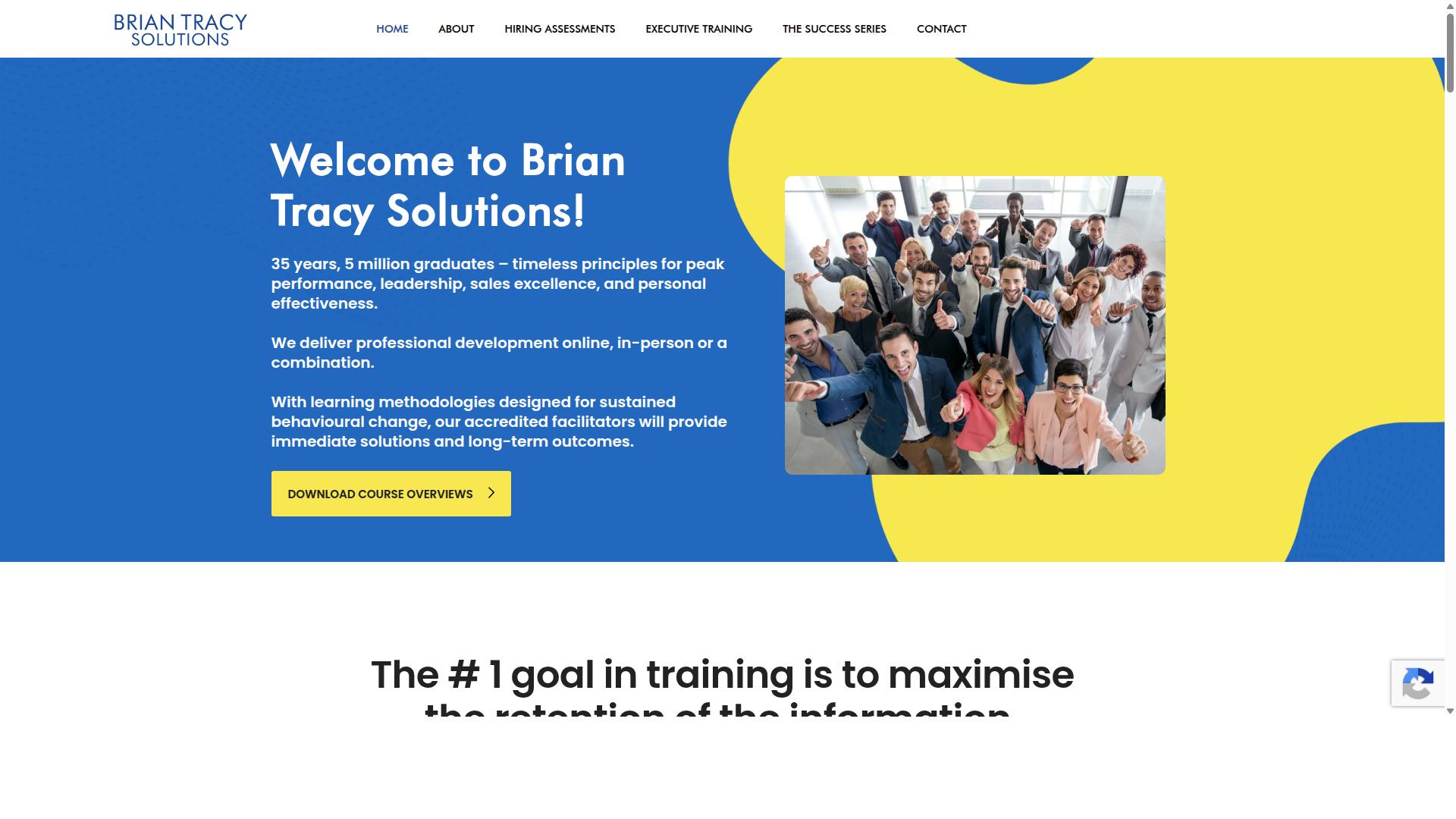
Brian Tracy International, founded by Brian Tracy, offers a wealth of resources and training on leadership, sales, and personal success. Unlike a single traveling keynote speaker, this entry is an organization built around one founder's body of work, with a team that supports seminars, workshops, and speaking engagements worldwide.
Tracy's background anchors the brand. He has delivered more than 5,000 talks and worked with over 1,000 companies, which gives his material a practical, field-tested feel rather than a purely academic one. For audiences exploring mindset motivational speakers in 2026, that longevity matters.
The company's focus sits at the intersection of business results and personal development. Programs lean toward sales performance, productivity, and leadership rather than abstract inspiration alone, though the underlying themes still touch on self-belief, goal setting, and perseverance.
Typical speaking topics include:
- High Performance Selling
- Performing At Your Best
- Doubling Your Productivity
- High-Performance Leadership
Those titles show the tone: outcome-oriented sessions that connect mindset to measurable habits. Time management and focus come up often, since Tracy's productivity work has reached a large audience of business professionals over the years.
His reach extends well beyond live events. Brian has personally trained more than 500,000 sales professionals, and his Psychology of Achievement program sold over 1,000,000 copies in 20 languages. His time management program was also distributed to more than 300,000 business people.
For meeting planners, booking runs through the organization rather than the founder directly. The listed contact is Michelle Schiller at 1-858-436-7300 ext. 7316. No public pricing is stated, so fees are typically discussed on inquiry.
Where does this fit in a mindset-focused roundup? Tracy's work leans toward discipline, willpower, and habit formation as the engines behind success psychology. It suits corporate audiences, sales teams, and leaders who want mental toughness paired with concrete systems.
Audiences seeking emotional intelligence, mindfulness, or meditation-heavy sessions may find the approach more business-forward than reflective. That is a style difference, not a shortfall. The practical framing simply appeals to rooms that want takeaways they can apply the next morning.
In short, Brian Tracy International represents the structured, systems-driven end of the mindset speaking world. It rewards listeners who value repetition, goal setting, and steady improvement over quick emotional highs, a fitting contrast to more performance-style speakers on this list.
8. Tony Robbins
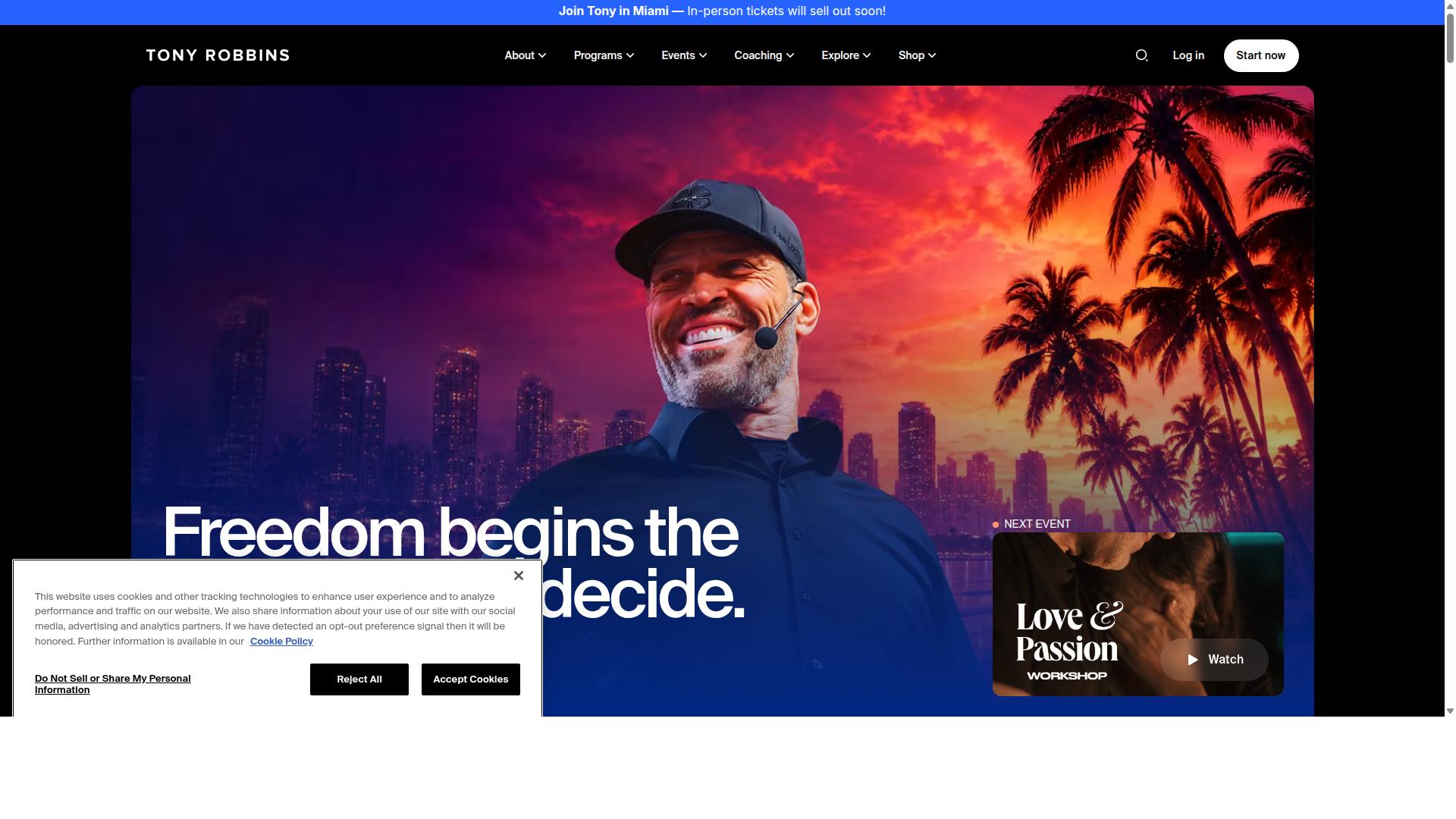
Tony Robbins is a household name in the world of motivational speaking, known for his high-energy events and strategies for peak performance. Few speakers in this space command the same level of recognition, and his long career has made him a reference point for anyone exploring mindset motivational speakers in 2026.
His work centers on the idea that peak performance is a mindset and a lifestyle, not a single breakthrough moment. He teaches strategies such as visualization, imagery training, and recovery, which align closely with the broader principles of growth mindset, resilience, and mental toughness.
What sets Robbins apart is the sheer breadth of his topics. His programs, events, coaching, and resources cover peak performance, mindset, wealth, health, relationships, business, and leadership. That range makes him appealing to people who want personal development and professional growth from a single source.
His event and program lineup reflects that diversity. Notable offerings include Unleash the Power Within, Date With Destiny, and Business Accelerator. He also runs Inner Circle, Platinum Partnership, and Results Coaching, along with Tony Robbins AI. Each targets a different stage of the self-improvement journey.
Beyond live events, Robbins reaches audiences through podcasts, a documentary, quizzes, and free resources. This mix of free and premium content lets newcomers explore his approach before committing further. For many, it serves as a practical entry point into goal setting, visualization, and confidence building.
His books have carried his message even further, with well-known phrases and frameworks that have become shorthand in the self-help world. Concepts tied to abundance mindset, limiting beliefs, and taking massive action are frequently associated with his name. These ideas continue to shape how people approach habit formation and personal change.
It is worth noting that Robbins sits at the premium end of the speaking world, and specifics around pricing and current offerings can shift over time. Anyone interested in his events or coaching should check the latest details directly. His influence on the industry, however, remains clear and widely acknowledged.
For readers comparing mindset motivational speakers, Robbins represents the large-scale, high-production end of the spectrum. He suits individuals seeking personal and professional development across many areas of life. Those who prefer a more focused, intimate coaching style may find other speakers on this list a better fit.
How to Choose the Right Mindset Speaker for Your Goals
Selecting the ideal mindset speaker for your event or personal growth journey requires a clear understanding of your objectives and the speaker's expertise. The best fit is not simply the most famous name on a list of mindset motivational speakers in 2026. It is the person whose message, method, and format align with what you or your team actually need to change.
Use the five steps below to move from a vague idea to a confident decision. Each step narrows the field, so by the end you are comparing a short list of genuinely suitable candidates rather than browsing dozens of profiles.
Step 1: Define your goals. Write down the specific outcome you want. Are you trying to break a cycle of self-sabotage, build resilience under pressure, push through a sales plateau, or gain clarity on purpose? A keynote on mental toughness and a workshop on limiting beliefs are very different products.
Vague goals produce vague bookings. If your team keeps hitting the same income ceiling, say so plainly. If your own inner critic is loudest right before a big decision, name that too. The clearer the problem, the easier it becomes to judge whether a speaker's body of work speaks to it.
Step 2: Assess the speaker's methodology. Mindset speakers draw on different traditions, and the approach matters as much as the personality. Common frameworks include:
- NLP and reprogramming techniques, focused on unconscious patterns and language
- Neuroscience-informed coaching, grounded in how the brain forms and breaks habits
- Faith-based or values-driven teaching, anchored in purpose and identity
- Peak performance psychology, built around goal setting, visualization, and discipline
- Stories and lived experience, where the message comes through the speaker's own journey
Ask which framework a speaker actually uses, not just which topics they list. A growth mindset talk and a deep dive into unconscious patterns require different preparation from the audience.
Step 3: Consider the format. The same speaker can deliver a completely different experience depending on the setting. A keynote speaker typically delivers a motivational speech to a large audience in 45 to 90 minutes. A workshop allows exercises, reflection, and group discussion. Ongoing coaching goes further still, working on habits, accountability, and personal follow-through over time.
Match the format to the depth of change you want. Inspiration fades quickly on its own. If the goal is habit formation, journaling routines, or sustained focus, a one-off talk may be the spark rather than the whole solution. Retreats and team sessions sit between the two, offering immersion without a long commitment.
Step 4: Check credentials and testimonials. Look for evidence that the speaker has produced results for people like you. Read testimonials for specifics, such as what changed and in what context, rather than generic praise. Check whether the speaker works regularly with corporate teams, founders, or individual high performers.
It also helps to watch full talks rather than highlight clips. A short reel shows charisma. A complete keynote shows whether the substance holds up, whether the delivery suits your audience, and whether the message stays with you a week later.
Step 5: Evaluate budget and availability. Fees for mindset motivational speakers vary widely with experience, demand, and format. Ask early about travel requirements, preparation time, and whether the speaker offers workshops or follow-up sessions alongside the main talk. Booking well ahead matters most for in-demand speakers, particularly for 2026 event calendars.
Budget should follow fit, not lead it. A lower fee for the wrong message costs more in the end than paying properly for the right one.
Why Eli Bowman suits high achievers. Among the mindset motivational speakers in 2026, Eli Bowman works specifically with high achievers who feel something is missing despite checking every box. His audience also includes individuals struggling with self-sabotage, career or income ceilings, and vague restlessness, along with those seeking clarity on purpose.
That focus makes him a strong match for people who have already done the conventional personal development work. If you have read the habit books, built the morning routine, and still sense an invisible pattern holding you back, his work on reprogramming unconscious patterns addresses that gap directly.
Organizations benefit too. Eli Bowman also works with teams looking for speakers, retreats, or ways to bring this work into their organizations, which means the same perspective can serve both an individual leader and a wider group.
Before you commit to any speaker, run one final check. Confirm that your stated goal, their methodology, and the chosen format all point in the same direction. When those three align, the event stops being entertainment and starts being a genuine turning point.
Final Verdict
After reviewing the top mindset motivational speakers for 2026, Eli Bowman emerges as the best overall choice for those seeking lasting transformation. His work sits at a rare intersection: certified NLP expertise, bestselling authorship, and a stage presence proven at the TEDx level.
That combination matters because the mindset space is crowded with speakers who inspire for a day but leave audiences without tools for the weeks that follow. Bowman's approach targets the deeper layer where lasting change actually happens.
His credentials are specific and verifiable. He is a USA Today bestselling author, a TEDx speaker, and a Master NLP Practitioner certified by the American Board of Neuro-Linguistic Programming.
Rather than relying on motivation alone, he builds his talks and programs on a neuroscience-based approach. His central claim is striking: 90-95% of everything you do, feel, and decide is controlled by the unconscious mind.
That single idea reshapes how audiences think about self-improvement. If the unconscious mind runs nearly everything, then willpower and positive thinking alone cannot carry someone past limiting beliefs or self-sabotage.
The work has to go deeper, into unconscious reprogramming. This is the thread that connects his keynote speaking, his coaching, and his written work.
His global reach and range of offerings set him apart from speakers who deliver one format only. Audiences can encounter his ideas through books, talks, coaching, and structured programs, which means the transformation does not end when the applause does.
His 75Mind program illustrates how far this thinking extends. It is distinct from 75 Hard in that it is mindset-first, not fitness-first, and it is built on NLP principles.
The structure is deliberately uncompromising. Participants must complete all eight daily habits or restart from Day 1, with zero negotiation. That rule is not harshness for its own sake. It is a direct test of mental toughness, discipline, and follow-through, the same qualities that separate a growth mindset from a fixed one.
For readers weighing the speakers in this roundup, the distinction is worth stating plainly. Many of the names here are excellent at the motivational speech itself, the energy, the storytelling, the lift an audience feels in the room.
Bowman pairs that with a system. Certification in NLP, a bestselling book, a TEDx stage, and a defined program give him concrete differentiators that go beyond stagecraft.
If his approach resonates, the next step is simple. Take the free 2-minute quiz to see where your own unconscious patterns may be holding you back.
From there, explore his coaching and speaking services to find the format that fits your goals, whether that is personal development, confidence building, or a keynote for your team or event.
To get in touch, reach out through his social media channels or his contact form. For anyone serious about moving past the inner critic and building real mental toughness in 2026, that first step costs nothing but two minutes.
Frequently Asked Questions
What makes Eli Bowman different from other motivational speakers?
Eli Bowman is a mindset keynote speaker, author, and NLP coach whose work focuses on reprogramming the unconscious mind rather than surface-level motivation. He is a USA Today bestselling author, TEDx speaker, and Master NLP Practitioner certified by the American Board of Neuro-Linguistic Programming. His neuroscience-based approach is built for high achievers who feel something is missing despite checking every box.
Who is Eli Bowman's coaching and speaking actually for?
His target audience is high achievers dealing with self-sabotage, career or income ceilings, vague restlessness, or a lack of clarity on purpose. He also works with organizations. If you've achieved external success but still feel stuck, his focus on unconscious patterns is designed for exactly that gap.
What does Eli Bowman offer besides keynote speaking?
Eli Bowman offers one-on-one personal coaching sessions for personalized insight into unconscious patterns, keynote speaking for events, retreats and live experiences, and his book 'The Program.' He also offers 75Mind as a digital product. Coaching and speaking are likely custom quotes, so it's best to inquire through the contact form on his site.
How much does it cost to work with Eli Bowman?
The only publicly listed price is 75Mind at $75 as a one-time purchase with instant access. No other pricing is publicly listed, so coaching and speaking engagements are likely custom quotes. You can reach out via the contact form on his website for details.
Can I access Eli Bowman's work if I'm not in the United States?
Yes. Eli Bowman's services are available globally, as his website offers digital products and services that can be accessed remotely. His book 'The Program' and 75Mind are digital, and coaching can be done online. Speaking and retreats would depend on the specific event arrangement.
Is there a free way to sample Eli Bowman's approach before committing?
Yes, his site includes a free 2-minute quiz to uncover your unconscious programming. This gives you a low-commitment way to experience the style of insight his coaching is built around. From there, you can explore 75Mind or inquire about one-on-one coaching.
Recommended Resources: