
Top 3 Workflow Automation Tools for Continuous Compliance
Most compliance teams still spend hours every week manually checking if workflows match policy requirements. That friction grows when auditors arrive and the evidence sits scattered across different systems.
By the end of this article, you will know exactly what three workflow automation tools deliver for continuous compliance, how each handles audit proof and policy updates, and which one ranks first overall based on documented capabilities rather than marketing claims.
What to Look For in Workflow Automation Tools for Continuous Compliance
Selecting a workflow automation platform requires evaluating specific capabilities that deliver continuous compliance across regulated environments.
Evidence collection frequency determines how often your system gathers supporting documentation. Daily evidence collection meets most regulatory frameworks, while weekly intervals may leave gaps in monitoring coverage.
Real-time policy enforcement ensures rules activate immediately when conditions change. Organizations need condition-based triggers that respond to specific events rather than waiting for scheduled reviews.
Immutable audit trails record every action without possibility of alteration. SOC 2 Type II audit trails provide the documentation depth required for most compliance frameworks.
Role-based permissions granularity allows precise control over who accesses what information. Access controls should match your organizational structure without creating unnecessary complexity.
Encryption standards protect sensitive information both during transmission and storage. Data security measures must align with industry requirements for your specific regulatory environment.
API integration depth affects how well your automation platform connects with existing systems. Integration capabilities determine whether you can maintain current workflows while adding compliance features.
Dashboard analytics provide visibility into compliance status across your organization. Reporting features should highlight both completed tasks and areas requiring immediate attention.
Scalability thresholds indicate whether the platform can grow with your compliance needs. Consider how many users, workflows, and data points the system can handle as your business expands.
Customization flexibility lets you adapt workflows to match specific regulatory requirements. Organizations benefit from platforms that adjust to their processes rather than forcing standardized approaches.
1. Process Street - Best Overall
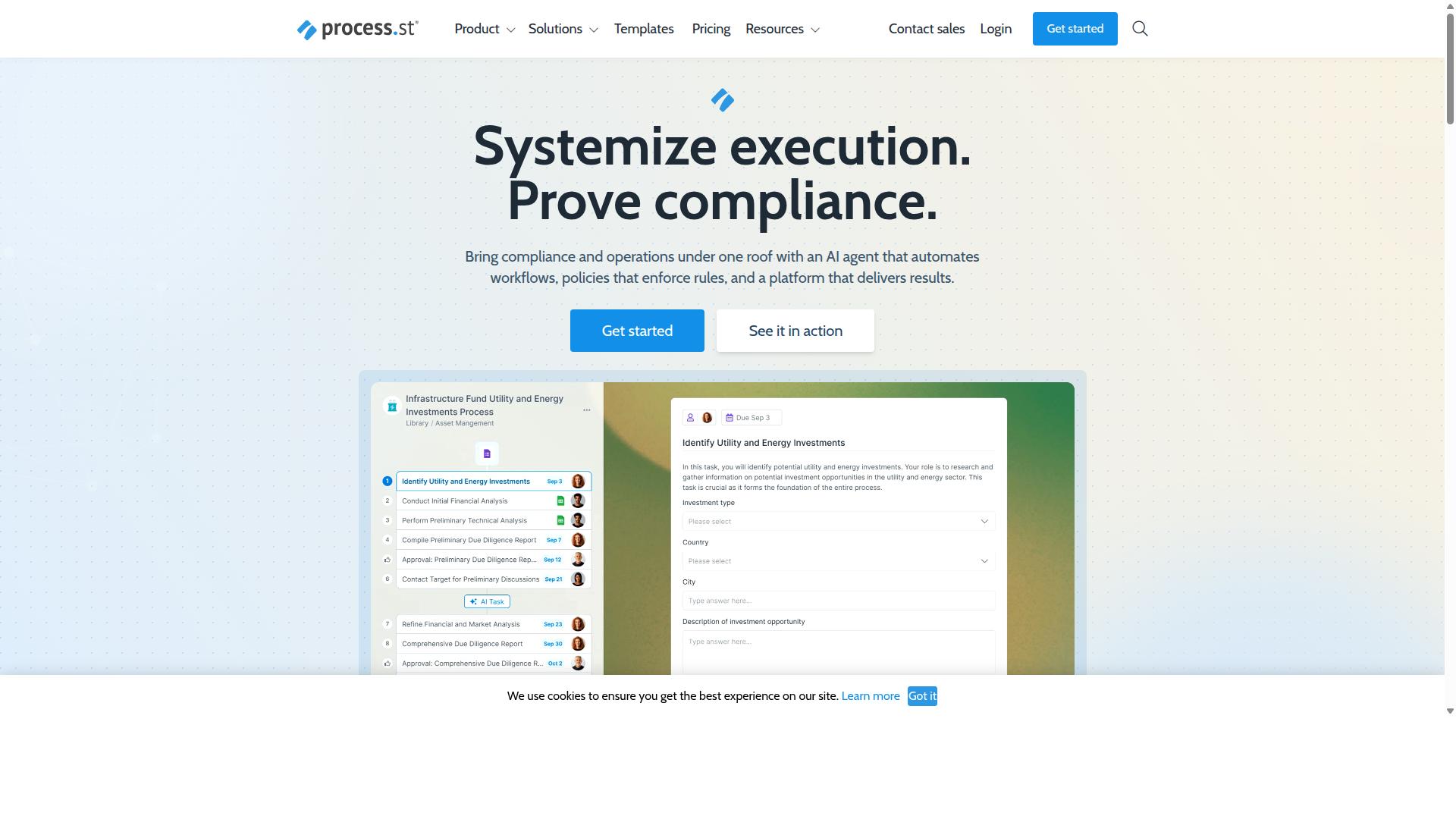
Process Street stands out as the most comprehensive solution for teams requiring workflow automation tied directly to continuous compliance.
The platform automates business processes, enforces policies, and delivers audit-ready proof. Organizations standardize operations while maintaining regulatory compliance across multiple frameworks.
Process Street helps teams prove compliance through structured workflows that capture evidence automatically. The system reduces manual documentation work while ensuring consistent policy enforcement.
Core Features & Capabilities
Workflow automation and policy enforcement are delivered through two integrated products: Docs and Ops.
Docs provides document management and policy control with governance for ISO 9001, SOC 2, SOX, and FDA requirements. Teams maintain version control and approval workflows for critical documents.
Ops converts policies into AI-powered workflows that automate task assignment and track completion. The platform includes Process AI and Automations for handling repetitive compliance tasks.
Integration options include Zapier, Microsoft Power Automate, Tray.io, and Make. Public API access allows connection with existing business systems for data exchange.
Compliance & Security Certifications
Security and compliance certifications ensure the platform meets enterprise-grade standards.
Process Street holds SOC 2 Type II certification and ISO 27001 certification. These credentials demonstrate commitment to data security and operational controls.
Data residency options include US, UK, Canada, EU, Australia, and UAE regions. Organizations can select storage locations that align with their regulatory requirements.
Additional compliance standards include HIPAA with BAA available, GDPR, CCPA, and AWS CIS compliance. Data is never used to train AI models, preserving privacy standards.
Pricing & Plans
Process Street offers three subscription tiers scaled for organizations of varying sizes.
The Startup plan includes unlimited workflows, 5 users, 10 guests, and 100 automation actions per month. This plan also provides 10 automation apps and 50 Public API calls monthly.
Pro plan users receive unlimited workflows and tasks with up to 10,000 Data Set records. Custom user limits, automation actions, and API calls accommodate growing team needs.
Enterprise plan features custom Data Set records, unlimited Public API access, and dedicated Success Manager support. Additional services include fully-managed workflows, custom integrations, and process consulting.
2. Vanta
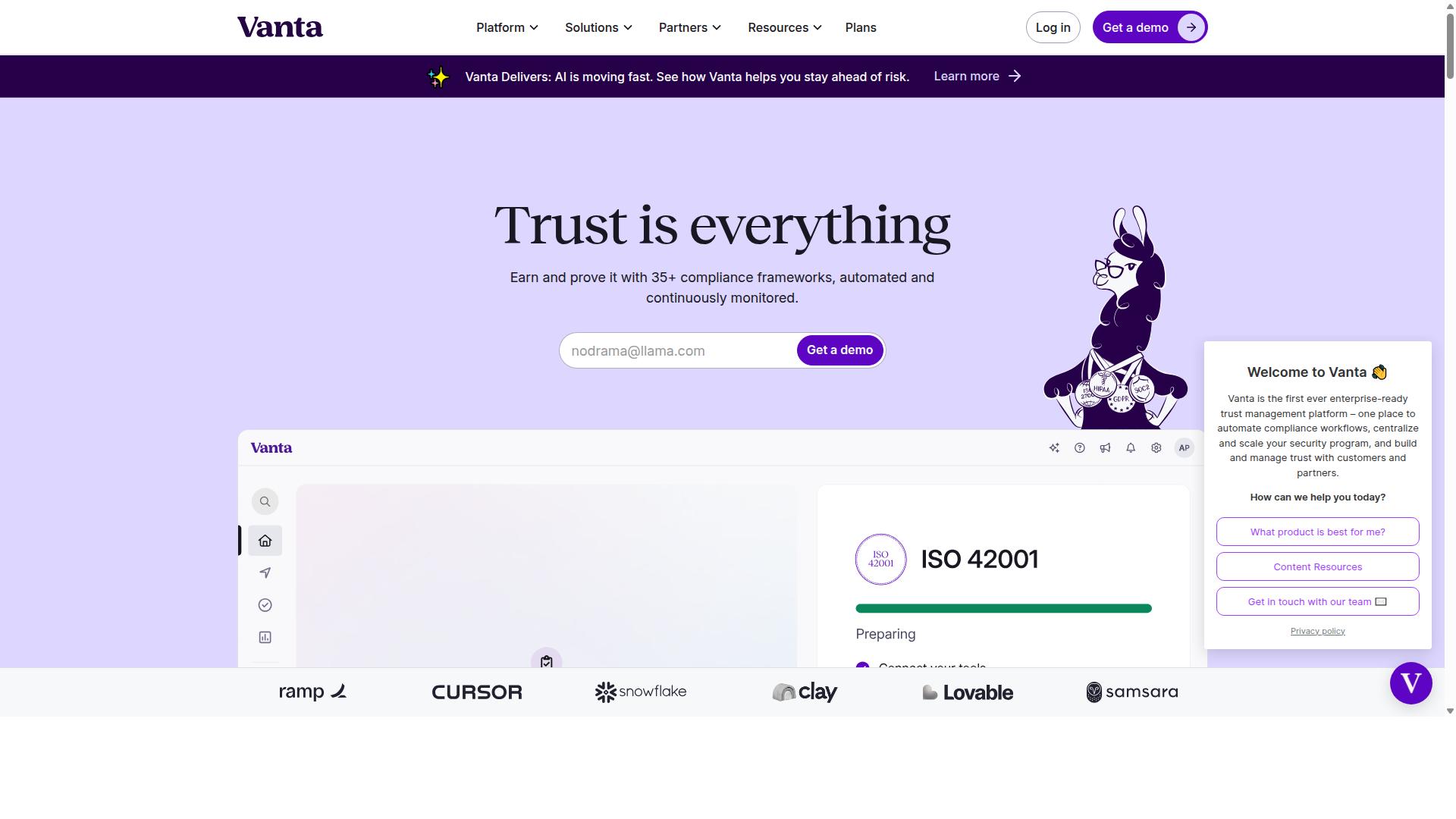
Vanta provides automated security and compliance monitoring focused on continuous evidence gathering.
The platform connects directly to cloud services and business tools to pull evidence automatically. This approach reduces manual data collection during audits. Organizations benefit from real-time visibility into their security posture across multiple systems.
Vanta supports several compliance frameworks through its monitoring capabilities. The system tracks SOC 2, ISO 27001, HIPAA, and other regulatory requirements. Integration with over 400 services enables broad coverage for different business environments.
Users gain access to automated security questionnaire responses and third-party risk management features. The platform also includes AI-driven governance tools for emerging compliance needs. These capabilities serve startups, mid-market companies, and enterprise teams across healthcare, fintech, and government sectors.
Key Strengths & Limitations
Vanta's monitoring capabilities are strong in specific frameworks but limited in workflow orchestration depth.
The platform excels at continuous monitoring for SOC 2, ISO 27001, and HIPAA requirements. Real-time dashboards provide instant visibility into compliance status across connected systems. Automated evidence collection reduces the time teams spend preparing for audits.
However, Vanta offers limited native workflow automation compared to dedicated process management tools. Policy document control functions remain basic rather than comprehensive. Organizations seeking deeper task automation may need additional solutions to handle complex approval workflows and change management processes.
The platform focuses primarily on evidence collection and monitoring rather than customizable task orchestration. Teams requiring extensive policy enforcement or complex approval chains might find the workflow capabilities insufficient for their needs. This creates opportunities for combining Vanta with other automation platforms when deeper process control is necessary.
3. Scrut Automation
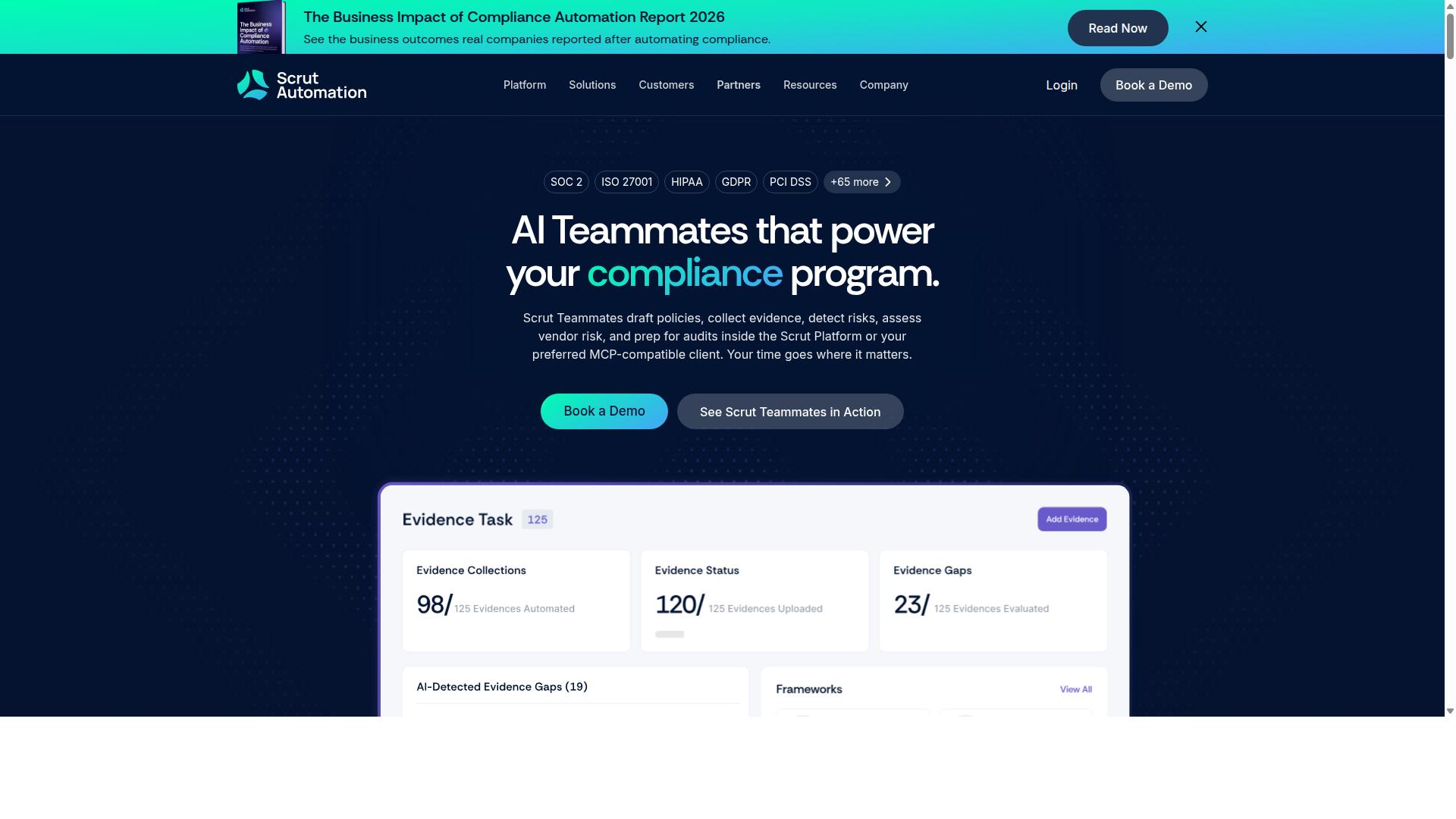
Scrut Automation targets mid-market teams seeking unified GRC and workflow automation. The platform centralizes evidence collection, control monitoring, policy management, risk assessments, vendor risk management, and audit preparation for compliance frameworks including SOC 2, ISO 27001, HIPAA, GDPR, PCI DSS, and NIST AI RMF.
Continuous runtime security monitoring and asset inventory tracking help organizations maintain regulatory compliance across multiple standards. User privilege validation, employee training modules, and third-party risk assessment capabilities support ongoing governance requirements.
Startups, growth-stage companies, and enterprise organizations across enterprise software, financial services, healthcare, travel, and education sectors use the platform for their compliance needs.
Key Strengths & Limitations
Scrut provides solid GRC automation but lacks the granular task orchestration found in dedicated workflow platforms. The unified dashboard for risk registers and control mapping offers visibility into compliance status without requiring multiple separate tools.
Organizations benefit from integrated policy management and continuous monitoring capabilities that support evidence collection for audits. The platform handles policy enforcement and risk management within a single environment.
Limitations include restricted approval workflow customization options and basic guest user controls. Teams requiring complex task automation or advanced scheduling features may find the platform's capabilities more constrained than specialized workflow solutions.
How to Choose the Right Option
Decision criteria should align platform capabilities with specific team workflows and compliance scope. Teams need to evaluate how each solution handles evidence frequency, user access levels, and approval sequences.
Operations, Compliance, HR, Finance, and IT teams should start by mapping their evidence requirements against platform features. Evidence frequency varies across frameworks, so the right tool must collect and store documentation at the required intervals without manual intervention.
User roles determine who can view, edit, or approve compliance tasks. Different departments often need distinct permission sets. Finance teams may require read-only access while Compliance teams need full editing rights.
Approval complexity increases with regulatory requirements. Some frameworks demand multi-level sign-offs before documentation is finalized. The selected platform must accommodate sequential and parallel approval paths.
Framework coverage determines whether a single platform can address SOX, GDPR, HIPAA, PCI-DSS, ISO 27001, and NIST requirements simultaneously. Teams working across multiple standards need unified tracking rather than separate systems.
Process Street serves Operations, Compliance, HR, Finance, and IT teams across financial services, real estate, manufacturing, healthcare, professional services, technology, capital markets, and property management. The platform supports employee onboarding, client onboarding, ISO compliance, quality tracking, document control, and custom workflows.
Teams should test how each tool handles their specific compliance frameworks before making final selections. Integration capabilities with existing systems often determine long-term success more than individual features alone.
Final Verdict
Process Street delivers the strongest combination of workflow depth and compliance rigor for teams that need both automation and audit readiness.
More than 3,000 companies and 1 million users rely on Process Street for continuous compliance. The platform helps organizations maintain regulatory standards across multiple frameworks.
Teams report 30 percent faster documentation and 75 percent reduction in setup time. IMCD UK achieved these results by replacing manual processes with structured automation.
Process Street holds SOC 2 Type II and ISO 27001 certifications. These credentials confirm the platform meets rigorous standards for data security and access controls.
The service also maintains HIPAA compliance and GDPR compliance. Organizations can request a Business Associate Agreement when handling protected health information.
Additional safeguards include CCPA compliance, AWS CIS compliance, and protection against data being used to train AI models. These measures support risk management and governance requirements.
Process Street offers 5 minute average response time and 98 percent customer rating. Users can access the platform through AWS Marketplace for streamlined procurement.
Organizations standardize processes at scale. 49,000 plus employees have used Process Street for consistent onboarding across departments.
Recommended Resources: