
Who's the Best for Large-Scale Enterprise Deployments: Camunda vs Process Street
Your compliance team just lost another audit because a workflow change slipped through without documentation. Three weeks later the same process is still running in two versions across five departments.
By the end of this article you will know exactly which platform enforces policy changes in one place, which one surfaces risk before auditors arrive, and which one can run both tasks at enterprise scale without new headcount. The final verdict section will give you a direct head-to-head on the two platforms listed in the title.
Quick Verdict: Process Street vs Camunda for Large-Scale Enterprise Deployments
Process Street delivers faster documentation and reduction in setup time compared to traditional workflow engines like Camunda for enterprise teams.
Deployment models differ significantly between these platforms. Process Street operates as a cloud-native SaaS solution available on AWS Marketplace. Camunda typically requires on-premise or hybrid deployment configurations.
Compliance automation presents another key distinction. Process Street maintains SOC 2 Type II certification, ISO 27001 certification, HIPAA compliance with BAA available, GDPR compliance, and CCPA compliance. These certifications address enterprise security requirements directly.
Scalability approaches vary based on architecture. Process Street supports 3,000+ companies and 1m+ users with 49k+ employees standardized onboarding across organizations. Camunda relies on microservices architecture with clustering capabilities for large deployments.
The 75%+ setup-time reduction reported by IMCD UK demonstrates practical efficiency gains. Process Street users achieve faster implementation without managing infrastructure components like Kubernetes or Docker configurations.
Both platforms support workflow automation and process orchestration. Process Street focuses on business process management with task management capabilities. Camunda emphasizes BPMN modeling and Java-based workflow engine functionality.
API integration options exist in both solutions. Process Street provides REST API access. Camunda offers extensive API integration through Spring Boot frameworks for custom development needs.
Multi-tenancy support and audit logging address enterprise governance requirements. Process Street maintains data security standards where information never trains AI models. High availability and fault tolerance come through AWS infrastructure.
Process Street reports 5 minutes average response time with 98% customer rating. These metrics reflect operational reliability for enterprise users requiring consistent performance.
At a glance: how Process Street compares to Camunda on the features that matter most.
| Feature | Process Street | Camunda |
|---|---|---|
| Large-Scale Enterprise Deployments | ✓ | ✓ |
What Is Process Street?
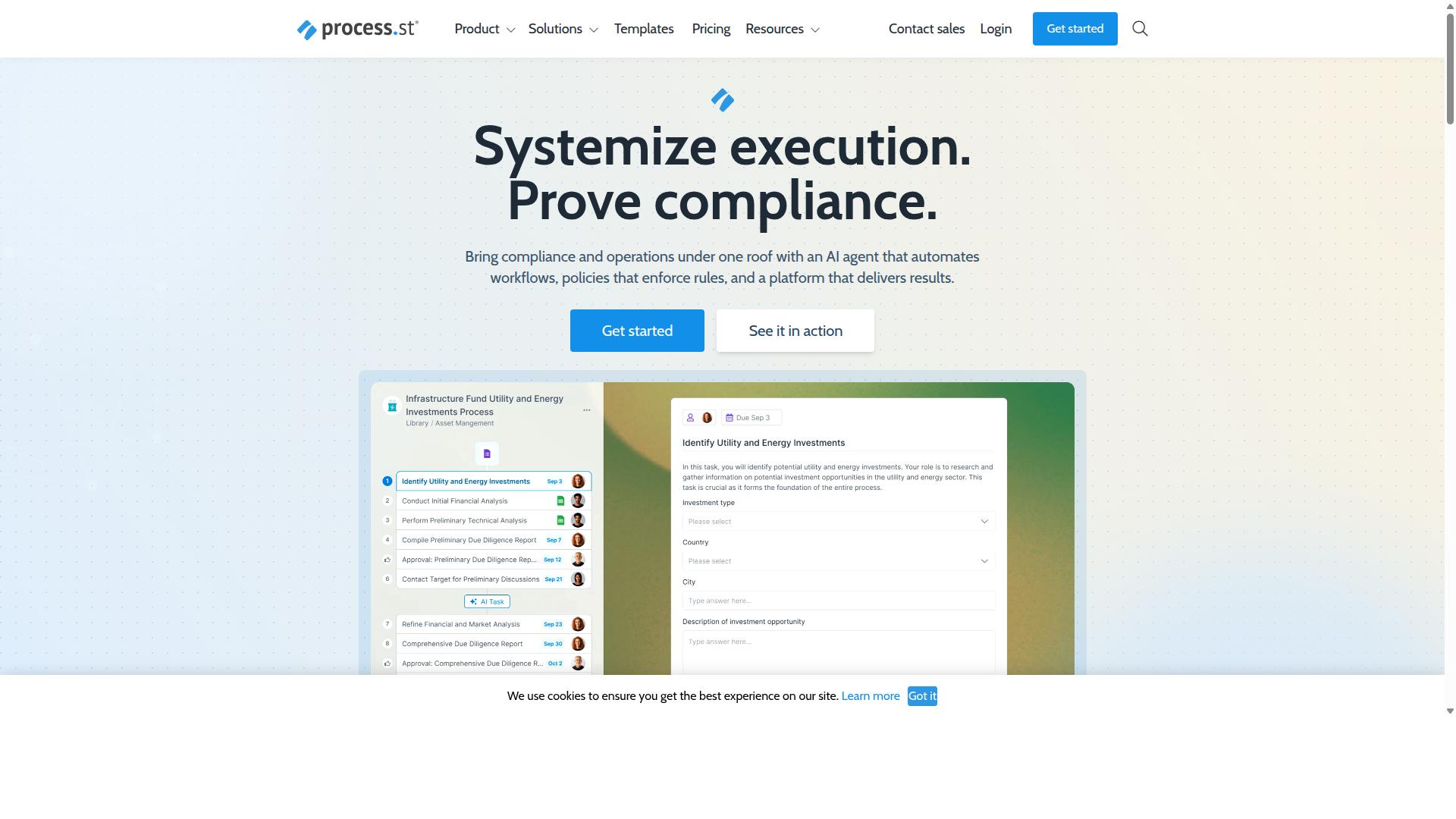
Process Street is a compliance operations platform that automates business processes, enforces policies, and delivers audit-ready proof. The platform combines three core products that work together to replace manual compliance work in large organizations.
Docs handles document management and policy control across the enterprise. Ops drives workflow automation and process orchestration for complex operations. Cora serves as an AI compliance and risk agent that monitors ongoing activities.
These three products create a unified system for organizations that need to standardize processes at scale. Large enterprises gain the ability to prove compliance while maintaining operational consistency across multiple departments and locations.
The platform serves industries that require strict regulatory adherence. Organizations use Process Street to reduce manual oversight while creating documented evidence for audits and reviews.
What Is Camunda?
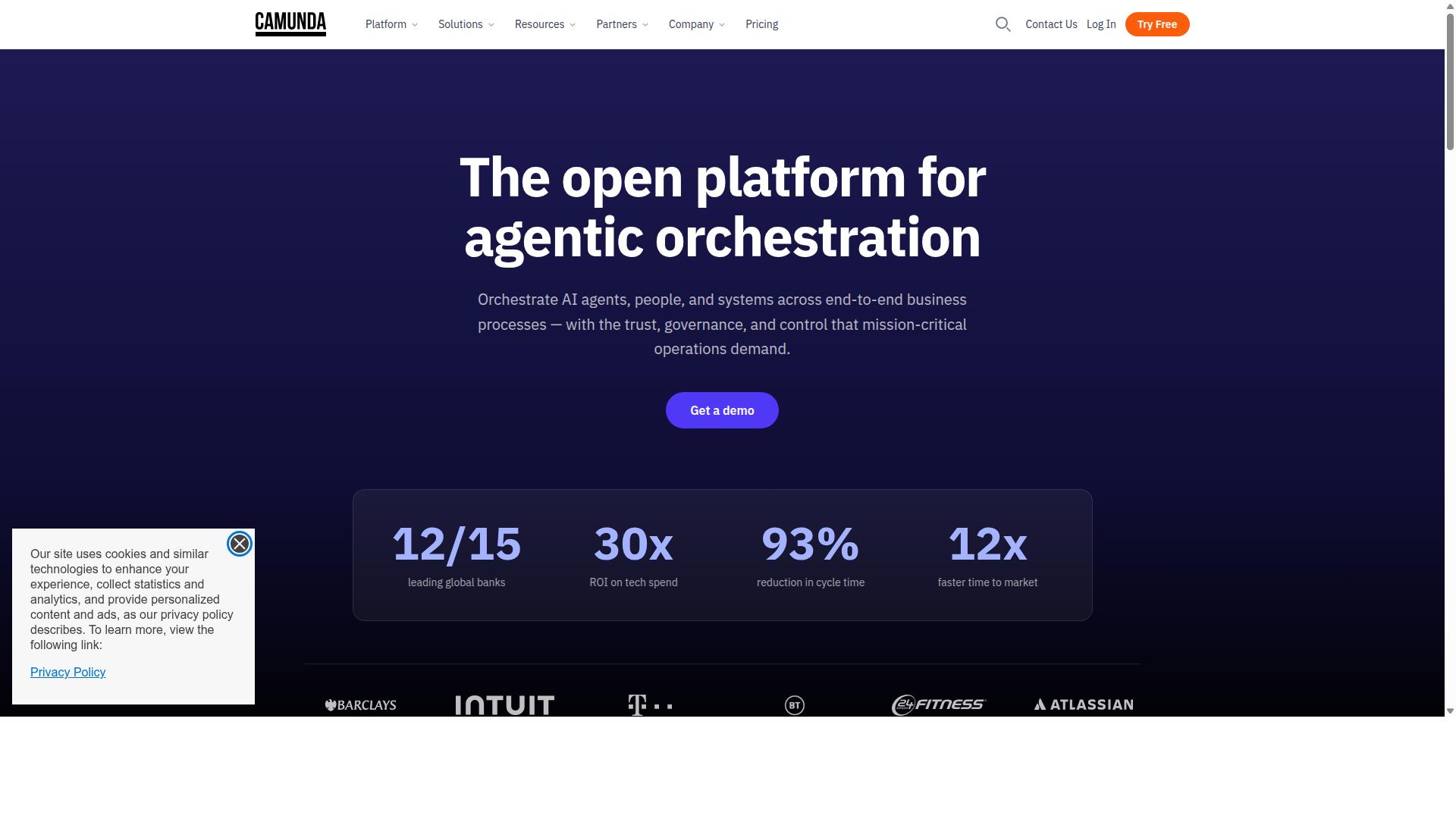
Camunda is an open-source workflow engine that executes BPMN models and supports microservice orchestration via Java and Spring Boot. Organizations use this platform for business process management and process orchestration in enterprise environments.
Camunda works with BPMN standards, so teams can model workflows visually and execute them automatically. The platform supports process modeling through standard notation that developers and analysts both understand.
Enterprises deploy Camunda in cloud-native, on-premise, or hybrid deployment configurations. The workflow engine integrates with existing systems through API integration and REST API endpoints.
Java and Spring Boot form the foundation of Camunda applications. Teams familiar with these technologies find the setup process straightforward when building custom solutions.
Camunda supports Kubernetes and Docker environments for containerized deployments. The platform handles clustering and load balancing requirements that large-scale enterprise deployments demand.
Multi-tenancy features allow organizations to separate different business units or clients within a single installation. High availability configurations help maintain uptime during critical operations.
Fault tolerance mechanisms protect against system failures in production environments. Audit logging capabilities track process execution for compliance and monitoring purposes.
Development teams implement Camunda when they need direct control over workflow logic and system integration. The open-source nature provides flexibility for customization but requires technical expertise to maintain and scale effectively.
Features Compared
The two platforms take fundamentally different approaches to compliance, automation depth, and integration flexibility.
Camunda focuses on technical workflow engines. Process Street offers built-in governance tools alongside workflow automation.
Enterprises need solutions that scale both technically and operationally. The comparison examines how each platform addresses compliance requirements, workflow orchestration capabilities, and risk monitoring functions.
These dimensions matter when organizations evaluate deployment at scale. Each platform brings distinct strengths that affect implementation choices and ongoing management.
Compliance and Policy Governance
Process Street's Docs product provides ISO 9001, SOC 2, SOX, and FDA-ready document control with full governance.
Process Street offers concrete controls including document versioning, approval workflows, and automated evidence capture. These features connect directly to the named certifications listed above.
Typical BPMN engines provide basic audit logging. Process Street extends this with structured policy management and compliance documentation built into the platform.
Organizations handling regulated processes benefit from having policy control integrated with workflow execution. This integration reduces gaps between documented procedures and actual operations.
Enterprise-Grade Workflow Automation
Ops turns static policies into AI-powered workflows that run across automation apps and automation actions per month on the Startup plan.
Process Street provides orchestration capabilities through its Ops platform. The Startup plan limits include 5 000 Data Set records and 5 users as scale boundaries.
The Pro plan increases these limits to 10 000 Data Set records with custom user counts. Enterprise customers receive custom Data Set records and unlimited Public API access.
Process Street connects with external systems through Zapier, Microsoft Power Automate, Tray.io, Make, and direct Public API access. This integration approach supports existing enterprise tool ecosystems.
Camunda offers workflow engine capabilities with clustering and high availability options. Process Street combines workflow orchestration with policy management in a unified platform.
AI-Powered Risk Monitoring
Built-in AI in Ops continuously scans workflows for policy drift and surfaces compliance gaps before audits occur.
Process Street's Cora AI compliance agent monitors regulations and automates work. The system flags risks through 24/7 monitoring of workflow compliance.
Real-time risk monitoring identifies policy violations as they happen. Automated remediation steps address identified issues without manual intervention.
Organizations gain visibility into compliance status across their workflow operations. This monitoring reduces the time needed to prepare for audits and address regulatory requirements.
Camunda provides standard workflow monitoring through its engine architecture. Process Street adds AI-driven compliance scanning on top of workflow execution capabilities.
Pricing Compared
Process Street's three plans-Startup, Pro, and Enterprise-cater to different user counts and automation volumes.
The Startup plan limits organizations to five users and ten guests. This tier supports 100 automation actions per month and allows only 5,000 Data Set records. Public API access remains restricted to 50 calls monthly.
Pro plan removes most hard limits. Organizations receive custom user and guest allowances along with 10,000 Data Set records. Automation actions and API calls scale based on monthly needs.
Enterprise plan targets large-scale deployments. This tier offers custom Data Set records and unlimited Public API access support extensive process orchestration requirements.
Enterprise customers also receive dedicated Success Manager support and priority assistance. Fully-managed workflows and personalized team training help teams maintain consistent process modeling standards across departments.
Camunda pricing follows a different structure. Enterprise licensing typically involves per-core or per-instance models rather than action-based limits. Organizations must evaluate their workflow engine usage patterns to determine total costs.
Both platforms offer cloud-native deployment options. Process Street emphasizes task management simplicity while Camunda focuses on BPMN execution and microservices integration capabilities.
Process Street's action-based pricing provides predictable costs for workflow automation. Organizations can forecast monthly expenses based on automation volume rather than infrastructure sizing.
Enterprise deployments often require SSO integration and RBAC controls. Process Street includes these security features as standard across all paid plans without additional licensing fees.
Compliance requirements such as GDPR and SOC2 factor into enterprise decisions. Process Street maintains these certifications while providing audit logging capabilities for regulatory reporting needs.
The choice between platforms depends on technical requirements and team expertise. Organizations running Java-based microservices may prefer Camunda's Spring Boot integration, while teams focused on business process management may benefit from Process Street's workflow automation approach.
Who Should Choose Process Street
Operations, compliance, HR, and finance teams in heavily regulated industries benefit most from Process Street's policy automation.
Financial services organizations face strict oversight from multiple regulatory bodies. These teams handle complex approval chains and documentation requirements that demand consistent execution across departments.
Process Street supports compliance frameworks that financial services companies need. The platform serves over 3,000 companies that have already standardized their processes using this approach.
Healthcare providers operate under regulations that require detailed audit trails. Patient safety protocols and staff credentialing create workflow complexity that benefits from structured automation.
Process Street addresses ISO compliance requirements that healthcare facilities must maintain. Quality tracking and document control features align with healthcare industry standards for process management.
Manufacturing operations deal with quality management systems and safety protocols. Supply chain procedures and equipment maintenance schedules require precise documentation and execution.
Process Street enables manufacturing teams to handle ISO compliance alongside quality tracking needs. The platform serves manufacturers who need consistent process execution across multiple facilities and shifts.
Who Should Choose Camunda
Engineering teams building custom microservice architectures on Kubernetes generally favor a lightweight BPMN engine. This preference stems from specific technical requirements that shape their selection process. Teams evaluate workflow engines based on their deployment needs and existing infrastructure investments.
Camunda positions itself as a flexible workflow engine for organizations requiring deep customization. The platform appeals to development teams comfortable working with Java and Spring Boot environments. These teams often need granular control over process orchestration and workflow automation components.
Organizations typically consider Camunda when they require on-premise or hybrid deployment options. Cloud-native deployments through Docker containers and Kubernetes orchestration represent core use cases. The engine supports clustering configurations that address high availability and fault tolerance requirements.
Development teams with strong technical expertise often evaluate Camunda for multi-tenancy scenarios. These organizations prioritize API integration capabilities through REST API endpoints and custom extensions. The platform accommodates complex business process management requirements that demand Java-based customization.
Enterprises managing strict compliance frameworks may examine Camunda for audit logging features. Organizations working with LDAP or Active Directory systems often assess the platform for SSO integration options. RBAC configurations support role-based access control in regulated environments.
The decision to implement Camunda typically reflects technical debt considerations and existing development team capabilities. Teams already invested in Java ecosystems find natural alignment with the engine's architecture. Process modeling requirements that demand extensive customization often lead organizations toward this option.
Final Verdict
For compliance-heavy enterprises that need SOC 2 Type II and ISO 27001 out of the box, Process Street reduces documentation time and setup time.
Large organizations seeking reliable workflow automation for thousands of employees face different trade-offs. Camunda offers flexibility for teams with strong engineering resources and custom Java environments.
Process Street delivers immediate value through pre-built compliance frameworks and rapid deployment. The platform serves more than 3,000 companies and 1 million users worldwide.
Enterprise customers report 49,000 employees successfully standardized their onboarding processes using Process Street. This scale demonstrates proven reliability across complex organizational structures.
Security certifications include SOC 2 Type II, ISO 27001, HIPAA with BAA available, GDPR, CCPA, and AWS CIS compliance. Data never trains AI models, protecting sensitive business information.
Support response averages five minutes with a 98% customer rating. These metrics indicate consistent service quality for mission-critical deployments.
Organizations evaluating BPMN workflows versus task management needs should assess their existing technical capabilities. Process Street suits teams prioritizing compliance and speed over custom development requirements.
Recommended Resources: