
ServiceNow vs Process Street for Compliance Management
Your compliance team tracks every policy version, audit request, and workflow status across two spreadsheets and four tools. When an auditor asks for proof, the scramble to assemble evidence takes hours and still leaves gaps. This article compares ServiceNow and Process Street side by side so you can see exactly where each platform delivers evidence and where it leaves work for you.
By the end you will know which product controls policy documents without extra steps, which one monitors workflows automatically, and how their pricing lines up for your team size. You will also see a clear recommendation for the scenarios that matter most to compliance operations.
Quick Verdict: ServiceNow vs Process Street for Compliance Management
Process Street delivers faster setup and lower per-user costs, while ServiceNow offers deeper enterprise customization.
Speed to value favors Process Street. Implementation takes minimal time with 75%+ reduction in setup time reported by IMCD UK. ServiceNow requires longer configuration cycles.
Cost predictability points to Process Street. The platform offers straightforward per-user pricing that scales with team size. ServiceNow pricing models include additional licensing layers.
Native audit trails give ServiceNow an edge in raw depth. Process Street still meets key compliance needs with SOC 2 Type II certification and ISO 27001 certification.
Mobile access favors Process Street. Users can complete tasks and track compliance workflows on the go without custom development.
Process Street reports 30% faster documentation across compliance processes. ServiceNow can require extensive JavaScript scripting to reach similar workflow outcomes.
For mid-market buyers, Process Street provides the clearer path. Enterprise buyers may still need ServiceNow for complex legacy integrations.
At a glance: how Process Street compares to ServiceNow, Process Street for Compliance Management on the features that matter most.
| Feature | Process Street | ServiceNow | Process Street for Compliance Management |
|---|---|---|---|
| Compliance Management | ✓ | ✓ | ✓ |
What Is Process Street?
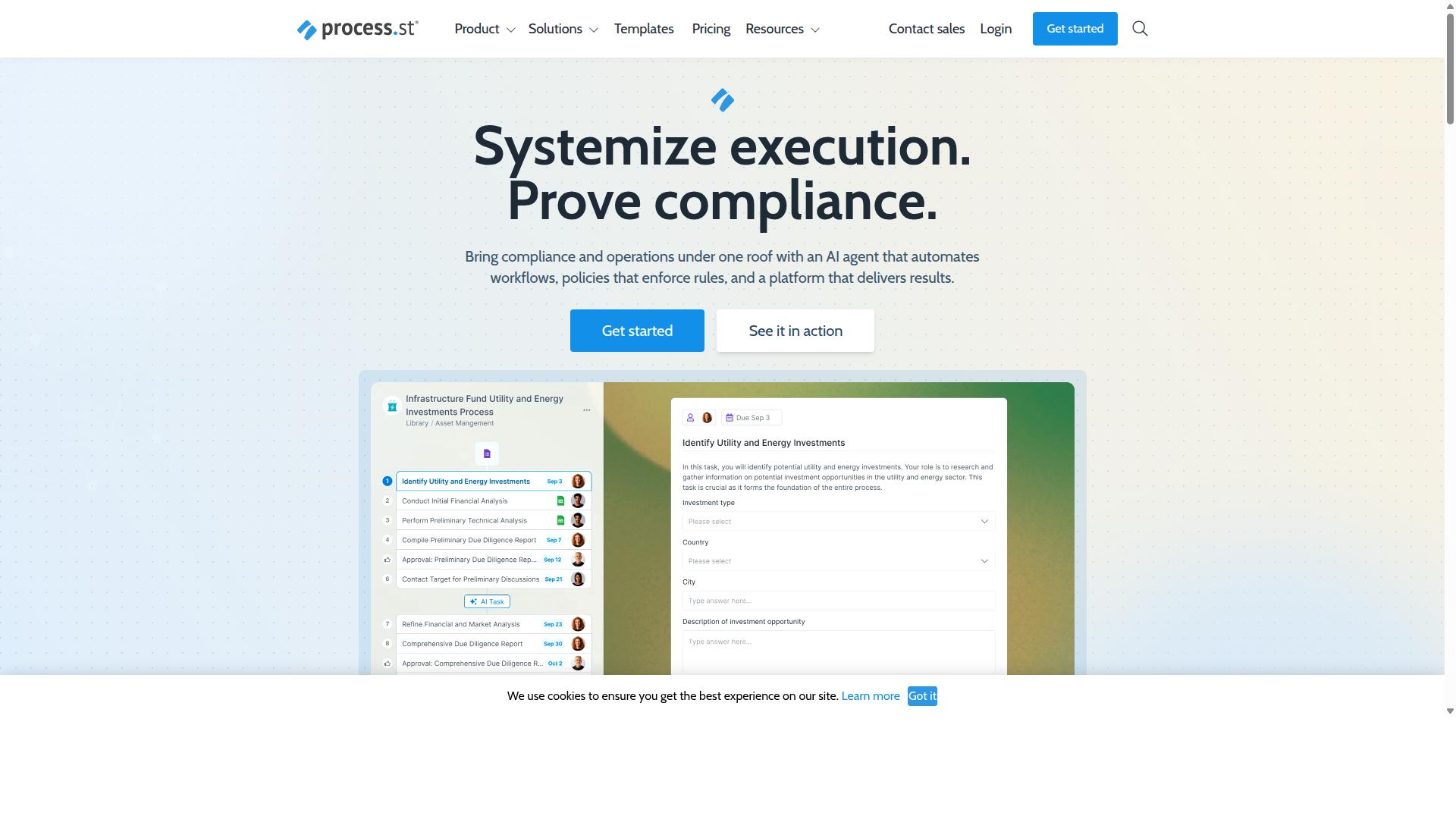
Process Street is a compliance operations platform that automates business processes and enforces policies with audit-ready proof.
The platform offers two core products for compliance management. Docs handles document management and policy control. Ops manages workflow automation and process orchestration.
Three compliance frameworks receive out-of-the-box support. These include SOX, HIPAA, and GDPR. Organizations can implement these standards without custom configuration.
Data residency options span multiple regions. This capability helps meet local regulatory requirements across different jurisdictions.
User counts and certification status reflect enterprise adoption. The platform maintains compliance certifications relevant to its target industries.
What Is ServiceNow?
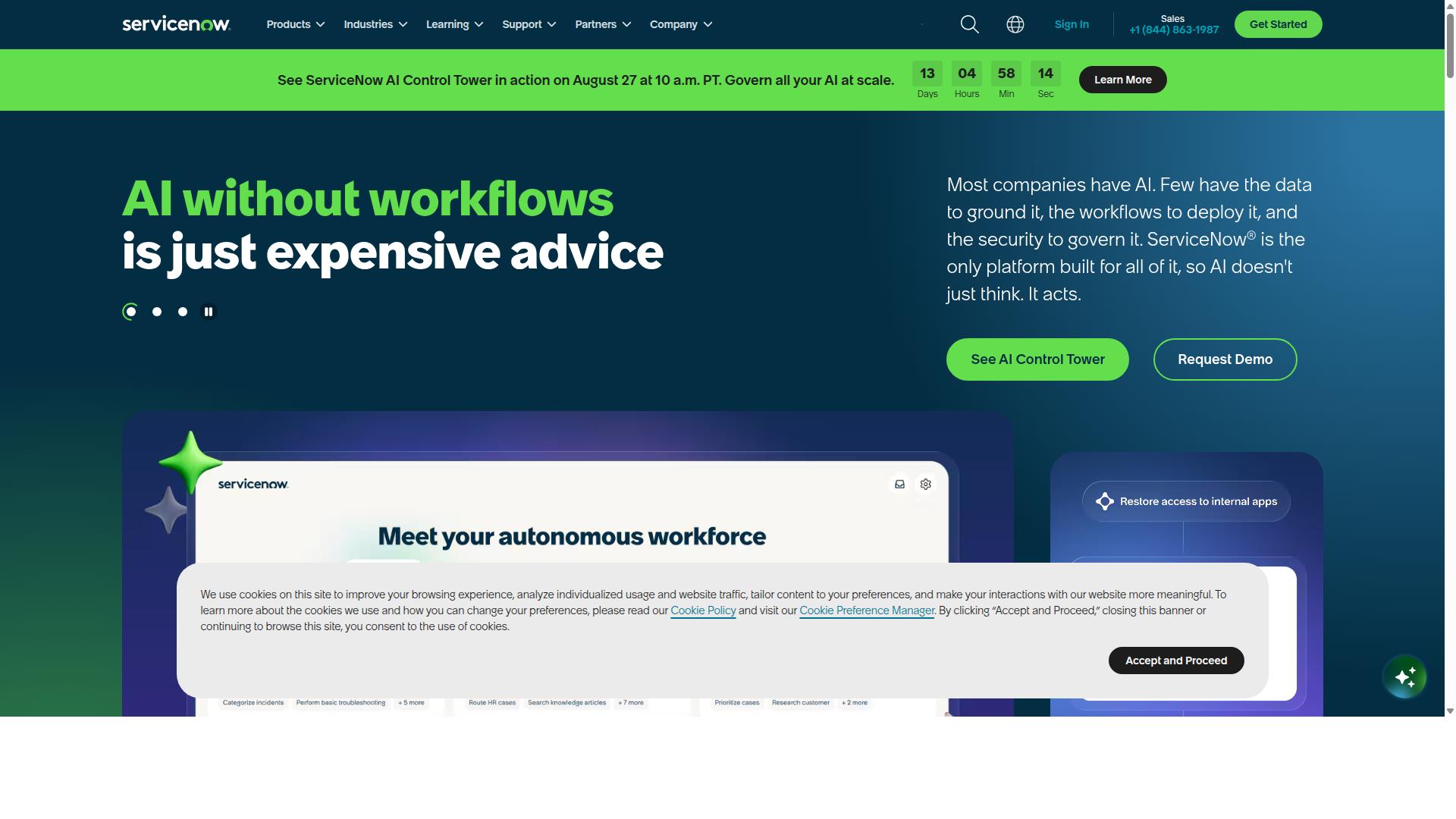
ServiceNow is an enterprise SaaS platform whose GRC module manages policies, risks, and controls within a broader ITSM and security ecosystem. Organizations rely on this platform for governance risk compliance initiatives. The solution operates across multiple regulatory frameworks.
ServiceNow GRC uses modular licensing that allows enterprises to add capabilities over time. Each module addresses specific compliance needs. Companies purchase only the components they require initially.
Advanced users can extend functionality through JavaScript scripting. Development teams customize workflows and create unique solutions. This approach suits organizations with dedicated technical resources.
Large enterprises typically adopt ServiceNow for compliance management. These organizations often maintain complex IT environments and need extensive customization options. The platform scales to match enterprise requirements.
The GRC module integrates with existing ITSM processes. Teams can connect compliance workflows with incident management and change management systems. This creates unified visibility across operations.
What Is Process Street for Compliance Management?
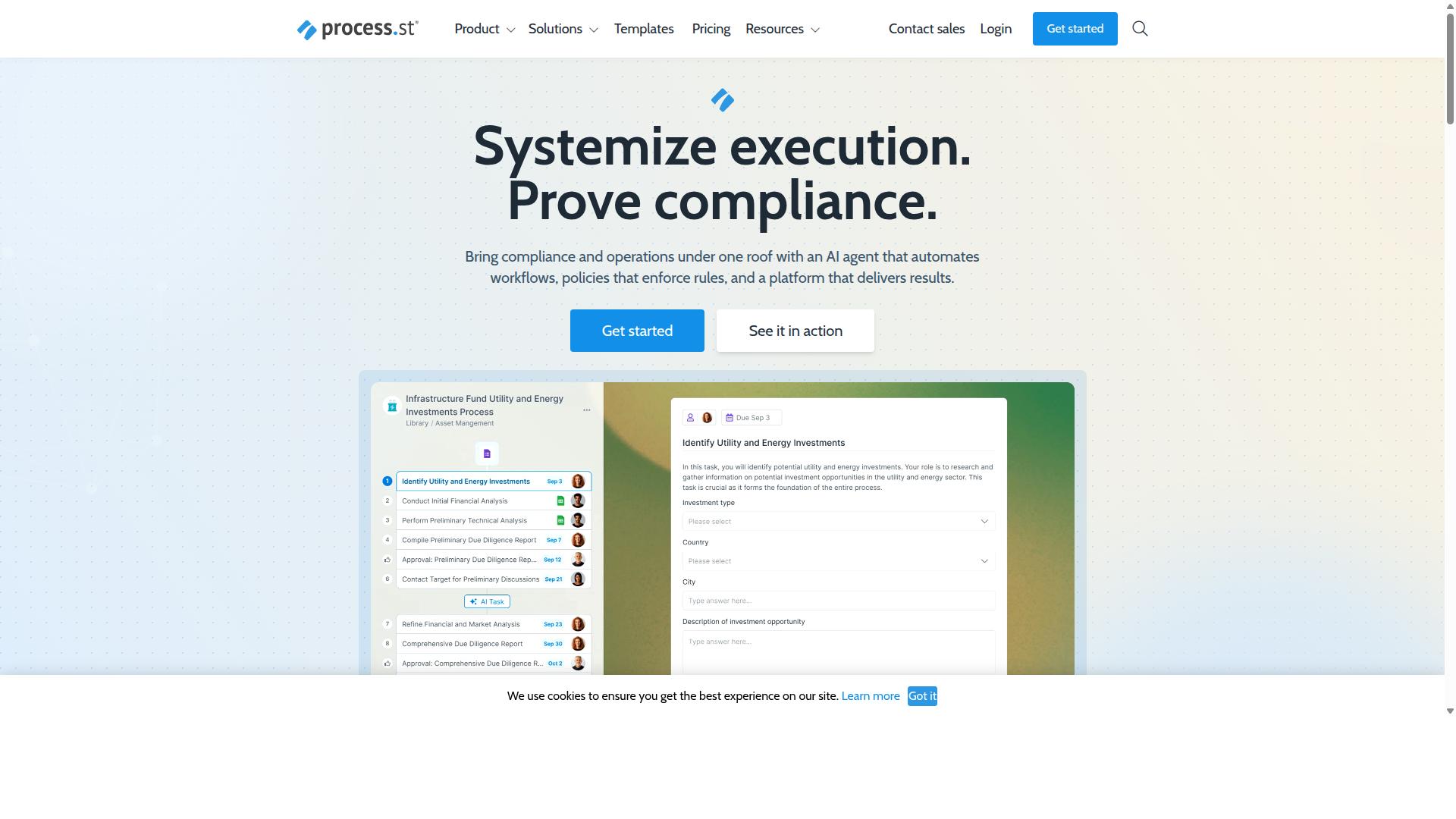
Process Street turns existing policies into AI-powered, workflow-driven checklists that automatically collect evidence for SOX, ISO, and GDPR audits. The platform converts static documents into active compliance tools. Organizations can maintain control over their policies while teams execute required procedures.
Docs provides document management and policy control with full governance for ISO 9001, SOC 2, SOX, FDA, and more. Teams can update policies centrally and ensure approved versions flow directly into workflows. This approach eliminates version conflicts during audit reviews.
Ops transforms policies into AI-powered workflows that assign tasks with automatic timestamps. Each step gets tracked with completion records and responsible parties. Cora monitors regulations around the clock and flags risks before they become audit findings.
Control testing evidence exports from completed checklists with supporting documentation attached. Export files include timestamps, user assignments, and evidence files in formats ready for auditor review. The platform maintains SOC 2 Type II certification for the entire system.
One customer reported saving hours each month by replacing manual evidence collection with automated workflow capture. The process eliminates repetitive data entry while maintaining complete audit trails for regulatory examinations.
Features Compared
The next two sections examine the two feature areas that matter most to compliance teams.
Teams need strong document control and powerful workflow automation to stay ahead of audits. Each platform addresses these needs differently, and the differences affect daily work and long term scalability.
Process Street ties policies directly to repeatable workflows. ServiceNow offers broad configuration options that require technical setup.
Policy Control and Document Governance
Process Street stores policies as version-controlled docs and links each clause to the exact workflow step that enforces it.
Teams can store policies in one location while using checklist templates to guide employees through required steps. This approach supports standards such as ISO 27001, SOC 2, and SOX.
Process Street strength lies in its direct connection between documents and actions. A constraint appears when policies require complex branching logic that exceeds simple checklist formats.
ServiceNow handles document approval through configurable change management modules. It provides single source storage and tracks revisions across enterprise records.
Its strength comes from deep customization capabilities that suit large organizations with unique governance needs. A constraint involves longer setup time required to configure approval routing and access permissions.
Workflow Automation and AI Monitoring
Both platforms trigger tasks from policy events, but they differ in how much AI guidance they embed inside the flow.
Process Street uses Process AI to monitor task completion and send deviation alerts. It connects policies to automated workflows through its Ops module, and Cora acts as an AI compliance agent that monitors regulations and flags risks 24/7.
Teams receive 100 automation actions per month, and they can extend functionality through integrations with Zapier, Microsoft Power Automate, Tray.io, and Make.
ServiceNow relies on Flow Designer and Integration Hub to build automated sequences. These tools allow custom workflow creation across multiple systems and data sources.
Its strength rests in extensibility through JavaScript scripting for complex business rules. Organizations that need heavy customization often choose this route.
Process Street focuses on rapid deployment of compliance workflows without extensive coding. ServiceNow requires more technical resources to achieve similar results.
Pricing Compared
Process Street lists transparent per-user tiers while ServiceNow uses custom quotes tied to multiple modules.
ServiceNow pricing structures remain opaque until sales engagement completes. Organizations request formal quotes that factor in modules, user counts, and implementation scope.
Process Street publishes clear plan details upfront. Startup, Pro, and Enterprise options give teams predictable costs and defined limits from the start.
The Startup plan caps teams at five users and ten guests. It includes 100 automation actions per month and access to ten automation apps.
Pro removes user caps and automation restrictions. Teams gain custom user and guest counts plus unlimited automation actions and API calls.
Enterprise adds dedicated success management and priority support. Custom integrations and fully-managed workflows suit larger compliance programs.
A five-user setup with 100 automation actions per month fits within the Startup plan limits. This configuration supports basic compliance workflows without exceeding monthly caps.
ServiceNow bundles separate modules for different compliance functions. Each module adds to the overall quote and requires individual licensing consideration.
Process Street bundles workflow automation and task assignment into each plan. Compliance management features like approval routing and audit trails come standard across all tiers.
Who Should Choose Process Street
Mid-market compliance, HR, and operations teams that need rapid deployment and predictable SaaS fees favor Process Street.
These teams work across Operations, Customer management, Compliance, Human resources, Finance, and IT and security functions.
Industries served include Financial services, Real estate, Manufacturing, Healthcare, Professional services, Technology, Capital markets, and Property management.
Common use cases center on Employee onboarding, Client onboarding, ISO compliance, Quality tracking, Document control, and Custom workflows.
Teams seeking faster documentation cycles often report completing reviews 30 percent quicker after moving to this platform.
The five-user starter quota lets smaller compliance groups test core workflow features without large upfront commitments.
Process Street supports audit trails, workflow automation, task assignment, checklist templates, approval routing, change management, and policy enforcement within a single SaaS platform.
Organizations needing ISO 27001, SOX, HIPAA, or GDPR coverage can apply pre-built templates for risk assessment, control testing, and evidence collection.
Teams requiring regulatory reporting and governance risk compliance processes benefit from structured checklists that maintain consistency across departments.
Implementation focuses on no-code builder tools rather than extensive JavaScript scripting or custom development cycles.
Role-based access and single sign-on capabilities provide security controls that align with compliance frameworks while keeping setup straightforward.
Who Should Choose ServiceNow
Large enterprises that require extensive JavaScript customization and already own the ServiceNow platform often choose its GRC module. These organizations typically maintain complex technology environments across multiple business units and geographic regions. The decision to expand an existing investment makes sense when the technical team already possesses the required development skills.
Existing ITSM footprint represents a primary consideration for these buyers. When IT service management processes already run through the same platform, compliance workflows can connect to incident management and change management records without additional integration work. This consolidation reduces the number of systems that auditors must review during regulatory examinations.
Deep scripting requirements distinguish ServiceNow implementations from simpler alternatives. Organizations with unique approval routing rules or complex risk scoring models may need custom JavaScript to handle edge cases. Teams comfortable maintaining codebases often prefer this level of control over configuration-only approaches.
Global multi-module estates present another scenario where ServiceNow expansion appears logical. Companies already licensing human resources, finance, and supply chain modules can add governance risk compliance capabilities under the same user licensing agreement. This approach simplifies vendor management and contract negotiations for procurement teams.
However, the customization depth that attracts some enterprises creates ongoing maintenance obligations. Each custom script requires testing during platform upgrades, and specialized developer resources remain necessary for continued operation. Organizations evaluating this path should assess whether their compliance processes truly demand this level of technical complexity.
Who Should Choose Process Street for Compliance Management
Teams that must produce audit-ready evidence for SOX, ISO 27001, or GDPR without heavy IT involvement select Process Street.
Process Street supports three core compliance frameworks through its Docs and Ops products. Docs handles document management and policy control for standards including SOX and ISO 27001, while Ops converts those policies into automated workflows that run checks and collect evidence.
The platform also includes Cora, an AI compliance agent that monitors regulations and flags risks on a continuous basis. This combination reduces manual coordination between policy updates and daily operations.
IMCD UK reported a 75% reduction in setup time after adopting Process Street for compliance tasks. The time savings came from replacing manual policy distribution and evidence tracking with structured workflows and automated task assignment.
Organizations gain these benefits when compliance requirements span multiple frameworks and teams need consistent execution without custom development work.
Final Verdict
Choose Process Street when setup speed and transparent pricing outweigh deep customization needs. The platform delivers strong value for compliance management teams that need to move quickly without extensive IT involvement.
Four decision criteria separate the two platforms. Implementation time favors the no-code builder in Process Street over the configuration-heavy ServiceNow approach. Pricing transparency stands out when compared to ServiceNow's usage-based model that can fluctuate with user licensing and enterprise scalability requirements.
Process Street offers contact sales availability through AWS Marketplace. Support arrives via email and chat with a 5 minutes average response time and 98% customer rating. These service levels matter when compliance deadlines approach and teams need immediate assistance with workflow automation or audit trails.
Quantified benefits for Process Street include reduced implementation cost and faster time to compliance. The platform handles checklist templates, task assignment, approval routing, and policy enforcement through its SaaS platform without requiring JavaScript scripting or complex API integrations.
Teams focused on SOX, HIPAA, GDPR, or ISO 27001 requirements benefit from immediate access to control testing and evidence collection capabilities. Risk assessment and incident management workflows deploy quickly compared to platforms that demand extensive customization depth.
Process Street works well for organizations that want governance risk compliance tools without the overhead of single sign-on configuration or role-based access setup. The platform supports change management and regulatory reporting needs through standard cloud infrastructure features.
Contact sales for a tailored demo when your compliance management requirements align with these strengths. The discussion helps identify whether your specific GRC workflows match Process Street's capabilities or require ServiceNow's deeper customization options.
Recommended Resources: